Tampilkan postingan dengan label Theme Park. Tampilkan semua postingan

Kamis, 31 Maret 2016

Film Review & Theme Park: Amy (2015)

© A24 | Source: knightfoundation.org/
UK; 128 min.; documentary, biography, music
Director: Asif Kapadia
Cinematography: Matt Curtis
Starring/ Interviewees: Amy Winehouse, Mitchell Winehouse, Janis Winehouse, Raye Cosbert, Nick Shymanksy, Blake Fielder-Civil, Yasiin Bey, Tyler James, Juliette Ashby, Lauren Gilbert, Pete Doherty, Blake Wood, Tony Bennet, Mark Ronson, Salaam Remi, Andrew Morris, Sam Beste, Dale Davis, Cristina Romete, Chip Somers, Shomari Dilon, 'Spiky' Phil Meynell, Monte Lipman, Lucian Grainge, Guy Moot, Darcus Beese, Nick Gatfield

I don't think I'm going to be at all famous. I don't think I could handle it. I'd probably go mad, do you know what I mean? I would go mad. – Amy Winehouse

My contribution to Women’s History Month is a little less historic and the impact of the subject will only be determined in the future. I chose to take a look at Amy, the Academy Award winning documentary about troubled soul and Soul singer Amy Winehouse. I was neither a particular fan of her music (although I can certainly appreciate her talent) nor is there any particular historical or societal significance (in the sense of activism, charity, ...) to her that would justify a citation in this category. Still, the award recognition of the documentary as well as the recognition of the quality of Amy Winehouse’s music motivated me to take a closer look.

And Amy sure deserves checking out. The Asif Kapadia documentary roughly recaps Amy’s life story from when she first got into the business at around 16 years old to her premature death in 2011. Amid background-serving childhood flashbacks the documentary takes the viewers into closed quarters of first record- and manager deals, the recording studio, and even Amy Winehouse’s vacations and escapes from reality. The audience is taken on an emotional journey that starts with the discovery of a young and headstrong talent and follows the unravelling of a depressed and overwhelmed twenty-something.

What we can take away from the portrait of this woman is that passion and talent are admirable features that are appreciated by people – no matter how troubled or young and inexperienced you are. You are also able to overcome your own demons (even if only temporarily in this case) to create something amazing. And maybe you can also draw strength from the life of Amy Winehouse, who did a lot in her 27 years of life despite continuously facing new setbacks and struggles. But most of all the inclusion of Amy in our Women’s History Month feature may serve as an eye-opener to be equally headstrong and cautious, and that asking for help doesn’t necessarily signify weakness.

Technically Amy largely uses home videos and press/ paparazzi footage as well as a large number of interviews presented as voice-overs. Friends and family must have all pitched in to provide material that really shows the woman behind the music. The interviewees are chosen in large number and with very different perspectives on Amy’s life, ranging from parents, to close friends, producers, and famous collaborators, providing a seemingly rounded picture. All too often documentaries can be manipulated by a very one-sided choice of information, but here it doesn’t seem overtly so. Kapadia created an extensive documentary (I mean two hours is really bordering on too long) that works without any artificial and plot furthering elements to provide a raw and close to honest image. Hand-held camera footage, interviews, and Amy Winehouse’s songs are enough to tell a chronological and revealing story. To me it was especially moving and slightly horrifying how deeply personal and reflecting of her current situation the lyrics of Winehouse’s popular songs really were. I don’t think I’ll ever be able to mindlessly blab along to the radio and her overplayed singles such as Rehab ever again. And that is a testament to this film. I honestly couldn’t care less about Amy Winehouse before, but now I can appreciate how much she gave to her music.

Surprisingly enough Amy holds the promise it sets out to: To provide an up close and personal look at the Amy Winehouse behind the music. As it turns out her music already is an open window to her soul, but raw and uncut footage really brings home the message. While a little too long for my taste, the length gives the movie depth and room to really track the different behind-the-scenes stages of her career. There is no overt guiding of opinion. Still you cannot help but feel for this woman and be moved by her fate – self-inflicted or not. By the end of Amy, I was feeling raw and emotional and a good bit creeped out (by her demons, I guess). In any case a well-made documentary and “a portrait of the artist as a young [wo]man”.


Rating: 

Minggu, 22 November 2015

Out and About: Chasing the Screen in Chicago

© BSP

At the end of our Chicago-themed week we are getting up close and personal with the city. I visited the Windy City just a week ago and went on a stroll through TV and movie history. While at first thought it is New York and L.A. that come to mind when we think about filming locations, Chicago is actually a very popular spot - on screen and off. The avid watcher that I am, I wanted to see where my favourites were made and went on a location hunt. Below I share some of my Chicago favourites with a screen shot of the actual scene taking place and me doing my best to recreate it:


E.R.:

Without a doubt Emergency Room (1994 - 2009) is one of my favourite shows of all time, so when I got the chance to be in the city where it was set, of course some ER related sightseeing was on my agenda. While the show was mostly shot at the WB Studios in L.A., the cast and crew came out to Chicago for a number of location shots over the years. The fictional County General Hospital was supposed to be an inner city hospital, so a lot of prominent sights in Chicago's "Loop" made it into the show over the years. Also the elevated inner city metro "L" was a prominent feature of the show, where a lot of scenes took place within the 15-year time span of the series. While some locations have slightly changed, you can still see they're the real deal.


© WB | Source: its filmed here

© BSP


© WB | Source: its filmed here
© BSP


© WB | Source: its filmed here
© BSP


Chicago Fire:

Although a more recent addition to my viewing schedule, Chicago Fire immediately captivated me. Human bonds and extensive story lines of catastrophe are what makes the show work, just not in a medical setting like ER, but in a Chicago fire house. They were actually filming the show on location somewhere while I was there, but it was too far out for me to make that journey. So I just had to make due with visiting the original fire house, that actually is the home to the real engine 51 and ambulance 61.


© BSP


© BSP


Sense8:

Earlier this year I wrote a review on the Netflix Original Sense8. While the show does have many flaws, it still has a lot of visual appeal. There are impressive scenic shots of the cities where the show was shot at and Chicago features prominently in the first episode, centered on Will Grotzki. Here is one picture from the show's theme of the Jelly Bean.


Ferris Bueller's Day Off:

Man, haven't we all wanted to take a day off to play hookie like Ferris Bueller? And in a city such as Chicago at that! Well, there are a lot of Chicagoan places featured in Ferris Bueller, but a lot of them are also expensive to get to, so here"s my attempt at recreating the gang entering the Art Institute of Chicago.


© Paramount Pictures | Source: www.leavemethewhite.com
© BSP

Sabtu, 21 November 2015

Data Base: Chicago Fire (2012 - )

© NBC | Source: stocklandmartelblog
Series PremiereOctober 10, 2012
Genre
drama, action, ensemble
Country of OriginUSA
No. of seasons4
No. of episodes75
Running Time42 mins.
ChannelNBC
Websitehttp://www.nbc.com/chicago-fire
Developed byMichael Brandt, Derek Haas
StarringJesse Spencer, Taylor Kinney, Monica Raymund, Yuri Sardarov, Eamonn Walker, Christian Stolte, Joe Minoso, Randy Flagler, David Eigenberg, Charlie Barnett, Lauren German
Guest Stars Worth MentioningTreat Williams, 

Synopsis:

The squad of a Chicago fire station leads dangerous lives. There are difficult decisions to be made every day and not everyone makes it out alive. Amidst fire, losses, and budget cuts that hreaten everyone's future, the team of Chicago Fire stands together as a family. So bring on the drama! Bring on the romance! Bring on the cameradery!

Yay or Nay?

For everyone, who is into procedural dramas, here's one that'll get your adrenaline pumping! There are catastrophes and crimes that in their scale remind you of another Chicago-based drama: ER. The large ensemble cast is also similar to ER. There are a lot of very different, interesting characters on this show, ranging from the young, yet experienced all-female embulance team, to the veteran police chief, with some moral conflicts. You just want to root for them - and not just in a romantic way, which is a refreshing quality, compared to other shows. Yet, there are also quite a few egocentrical and annoying characters, who make it really hard to handle following their storylines. Still, there is a good balance in storytelling between being on the job and getting to know the characters' private lives. Chicago Fire also ties in with fellow shows Chicago PD and Chicago Med, which is an interesting way of unfolding a pretty detailed picture of a fictionalized Chicago and its people.

Kamis, 19 November 2015

Film Review: His New Job (1915)

Source: Doctor Macro's High Quality Movie Scans
USA; 31 min.; short, comedy, slapstick, silent film
Director: Charles Chaplin
Writing: Charles Chaplin, Louella Parsons
Cast: Charles Chaplin, Arthur W. Bates, Robert Bolder, Frank J. Coleman, Charles Hitchcock, Charles Inslee, Charlotte Mineau, Jess Robbins, Charles J. Stine, Gloria Swanson, Ben Turpin, Leo White


We all probably think that Hollywood is and always has been the US capitol when it comes to film making. However, back at the very beginning of the 20th century, the US movie market was dominated by neither Los Angeles nor Thomas Edison’s film studios in New York. In the 1900s and 1910s, the metropolis for moving images was, indeed, Chicago.

With production companies such as the Selig Polyscope Company or Essanay Studios situated there, the Windy City attracted many film stars, amongst them Gloria Swanson and Charlie Chaplin. The latter did, in fact, direct and star in fourteen silent films for Essanay. But while thirteen of those were shot in and around the company’s remote studio in Niles, California, His New Job was made solely on Chicagoan soil.

The 1915 short certainly is one of the lesser known Chaplin movies. Performing his usual character, the little Tramp, we see him audition for a role in a historical romantic movie, causing – as usual – chaos everywhere he goes. Basically, the film is about the Tramp upsetting the studio boss, the secretary, the movie director, the leading stars and extras as well as the carpenter who’s responsible for building the set design – and all this within the span of 30 minutes.

I won’t lie, like most people I love the Tramp and his clumsy, cheeky ways. While slapstick usually isn’t my kind of humour, Chaplin always manages to tickle laughter out of me. His body language and mimic are a sight to behold, his naiveté and impertinence are very engaging and most often disarmingly charming. So, watching a Chaplin movie is almost never bound to disappoint me.

Now, His New Job features the Tramp’s brazen nature perfectly and makes him shine especially when teamed up with a rivalling man, played by Ben Turpin, who’s trying to win the same movie role the Tramp is auditioning for. The funnily choreographed fights between the two make for some nice entertainment and are, for me, the outstanding quality of the film.

Unfortunately, the story and character development is a bit thin otherwise. While it’s fun to watch the Tramp cause mayhem on a movie set – in the former movie capitol Chicago, no less – Chaplin’s routine tends to feel a little redundant here and there. The kind and heartfelt qualities of the character, which have been fleshed out in later films such as The Tramp (1915) or – one of my favourites – City Lights (1931), are completely neglected here and replaced by repeated kicking and tumbling and kicking and stumbling and the like. With such a short running time, comedic elements that have been funny the first time around grow old pretty quickly once they are shown for the third or fourth time. Unfortunately, beside Chaplin and Turpin, no other characters are bound to leave an impression either – especially not Gloria Swanson who can be seen in a minuscule part as a stenographer.

While His New Job might not be Chaplin’s best film, it definitely allows him to show off his talent for physical comedy. Furthermore, it is one of fourteen films crafted during his Chicago era, in which he progressively worked on the development of his Tramp character, eventually turning him into one of the most beloved movie characters in film history.

Chaplin left Chicago for the Mutual Film Corporation in California after his contract with Essanay expired in December 1915. His career strived while Chicago’s dominance in US movie making declined. Unpredictable weather conditions and the rising popularity of the western genre turned California into a more suitable scene for movie makers. However, the Essanay studio facilities can, over one hundred years later, still be found in 1345 West Argyle Street, Uptown, Chicago. Today, an initiative is trying to restore the buildings for reuse and thus save a vital part of US film history and also Chaplin’s work. After all, His New Job might not be a masterpiece, but it’s a beautiful legacy of a movie era gone by.


Rating:

Rabu, 18 November 2015

A Scene to Remember: The Fundraiser Party Scene (The Dark Knight, 2008)

© Warner Bros. | Source: Batman.wikia


Despite the recent boom of comic adaptations in the cinematic universe, comics are a medium that have received little academic attention. That is because comics are still tightly linked to excessive action scenes, performed by men in tights, who are usually endowed with superpowers. Comics open up worlds that are distinctly different from the real one – worlds where spider bites lead to superpowers, mutants rescue or destroy the planet and your car may actually be an extraterrestrial being that becomes a humongous autobot when necessary. Comics and superhero stories in particular provide their readership with escapist fantasies that allow them to leave behind their daily lives and immerse themselves in the fantastic story world. If this is what gives comics their charm, however, then why did Christopher Nolan choose to ground his Batman adaptation The Dark Knight (2008) so firmly in reality?

In both the comic book and the film, Gotham City plays a role that exceeds that of a mere location. Although depicted in different manners, the city has a symbolic value that is one of the key themes in the Batman series. There is no Gotham without Batman and no Batman without Gotham.

The urban space is one of paranoia and fear. That is true for the gothic-noir Gotham of the comic books, with its archaic manors, grim gargoyles and dark, steamy alleys and also the Art Deco, modernist city of the Nolan films.

To create a sinister, oppressive mood, the comic relies heavily on noirish elements, such as the famous striped pattern of venetian blinds, which are borrowed from the cinematic genre of film noir. Colours, sharp angles and abstractions also play a major role for the tone of the comic book. A purple night sky or yellowish green alleys defy the laws of realism, but help to enhance the readers’ reaction to the scene. Or the way in which Batman’s shadow is drawn like a living, writhing thing, emphasises his demonic side. He is like one of Gotham’s gargoyles who protects but also frightens Gotham’s citizens.
© DC | Source: Batman - The Long Halloween p. 310

The Gotham City in the comics is a purely fictional place, while films, unless they fully rely on computer animation, have to use actually existent places and transform them to fit their needs. Unlike most other Batman films, The Dark Knight was not filmed in New York but in Chicago because Christopher Nolan wanted his film to be as realistic as possible and since Chicago does not have such a plethora of easily recognizable landmarks and building as New York does, there was little need for digital alteration: 

“It's that pressure-cooker, street-smart sense that makes Chicago a real — instead of manufactured — Gotham.” – Richard Moskal (Director of Chicago Film Office)

Unlike the comics, or even earlier Batman movies, Nolan’s The Dark Knight works with realism. His Gotham could be any modern metropolis and is not distinctly fictional. The film does not shun from showing that Gotham is not reduced to its nightlife, but plays with dualities – dark and light, good and evil – to augment its claim to realism.

The play with dualities is especially prominent in the scene in which the Joker crashes the fundraiser party Bruce Wayne, Gotham’s Dark Knight, gives for Harvey Dent who is Gotham’s White Knight. Just have a look:


The movement of the camera, when it follows the Joker through the room, is unsteady and therewith underlines the instability of the Joker’s psyche. When Rachel tells him to stop, he circles her like a predator and puts his potato peeler to her face. And when he does, the camera begins to drive in circles around them and creates a feeling of vertigo and sickness that mirrors what Rachel must feel. 

The background is blurred out and switches between showing Gotham’s two sides: the bright lit party room with Gotham’s high society, an anonymous, faceless crowd, too afraid to move or stand up against the group of criminals. And then outside of the window we have Gotham’s skyline with its modern glass skyscrapers all doused in darkness and reigned by fear, corruption and crime – the crime that has now invaded the ballroom. The way this scene is made up, with the rotating camera and the background alternating between light and dark reminds of the half-burnt coin TwoFace tosses in order to decide about fate. And it is not the only decisive scene in the film that is made up this way.

© Warner Bros. | Source: Screenshots The Dark Knight
The silhouettes of darkened skyscrapers, like those beyond the window, are typical symbols of modern urbanity. They represent progress, energy and dynamics, but also irrationality, constriction and peril. Despite the fact that Batman possesses the newest technology and sufficient financial means, he is nonetheless no match for the Joker’s unpredictable insanity and his battered potato peeler.

Gotham is a dark city, ruled by crime. It is a frightening place and to get that mood across, the comics and the film utilize very different means. 

Being a solely visual medium, the comic book works with estrangement and uses symbolic icons that have a negative connotation – steaming alleyways, dark, imposing mansions, graveyards and a dark colour palette. 

The film deliberately refrains from drifting into a too stylised set up. By taking one of the most realistic heroes in the comic universe and putting him into a realistic setting, Nolan goes against the strategy of the comics. He not only focuses on Gotham’s dark side, but also shows it by day, when it appears like any ordinary city. Instead of creating fear by estrangement, he counts on the fact that the familiar will create an equal or even greater reaction, because it is relatable, at some point even believable and accordingly all the more frightening.


Selasa, 17 November 2015

Chicago Week: Guess the Movie!

Source: icons ETC
Can you guess which movie is hiding behind this picture puzzle? Granted that the film we're looking for isn't set in Chicago entirely, it's the events happening there which kick off the story and make the main protagonists flee the Windy City in a cloack-and-dagger operation. But enough with the clues already, it's time to guess!


Tired of guessing? Find the answer here

Senin, 16 November 2015

Manic Monday: Chicago Week Opener

© Miramax | Source: YouTube screenshot
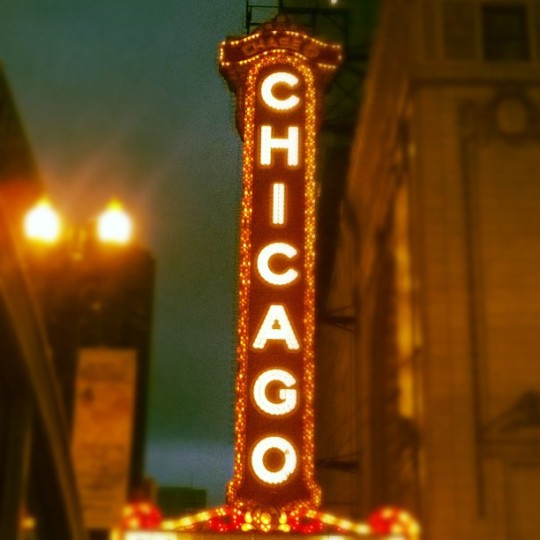
Today's Monday isn't a usual Manic Monday. Over here at BSP, it's the beginning of a Chicago-themed week filled with exciting content all around the Windy City. For you, this means that in the upcoming seven days, you should keep checking our site and social media presences to not miss out on the fun.

Why Chicago Week, you might wonder? Our response to this would be, well, why not? In fact, we got inspired because our very on Squuls happened to be on location last week. She has some goodies in store for you in the next days. Additionally, our Nata Lie has taken a closer look at Chicago's connection with one of the most popular comic book cities out there. Which one? You're sure to find out soon. Until then, there's even more Chicago glory to come.

Today, I'm gonna kick off our thematic week by presenting you with a classic scene (in two parts, alas) from the 2002 musical movie Chicago. Set in the Prohibition era of the 1920s, the film evokes a time in which mobsters such as Johnny Torrio and Al Capone shaped the notorious criminal history of the city. And while we always tend to associate Chicagoan crime with a bunch of male players, Rob Marshall's film shows us that it's the ladies who know all about ruthless revenge.

Enjoy the scene, and have a great time visiting Chicago with us.